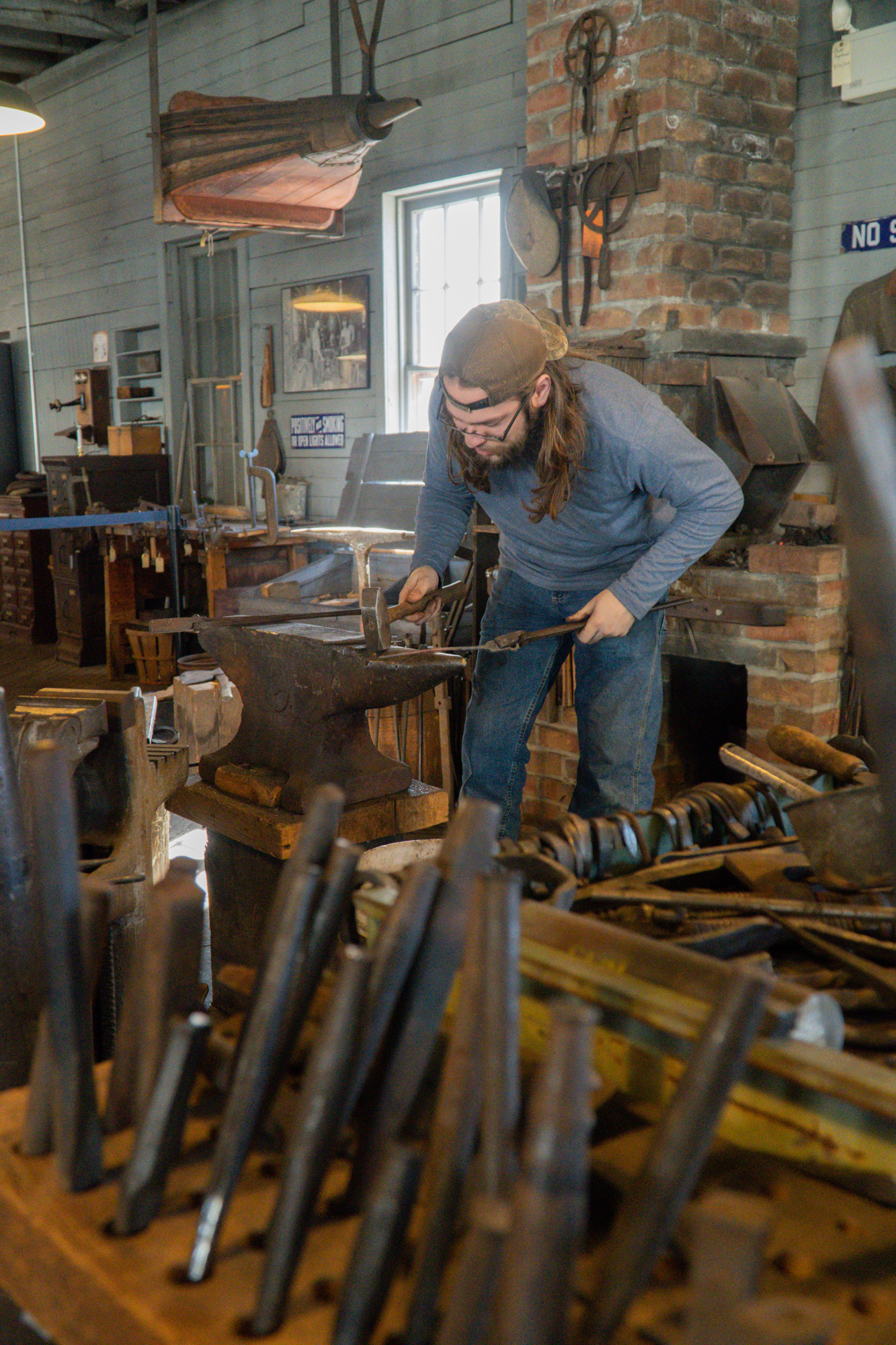
I was recently up in Pennsylvania at the Boyertown Museum of Historic Vehicles for an event. Tucked away in the far corner of the museum is an old carriage factory, parts of which are still in use. Walking up the stairs, the faint smell of a fire and coal lingers on the air. The room is filled with old carriages and the different tools that were used to construct them in the 1800s. Most of the items are static displays, but on one side, pieces of history are still alive and working.
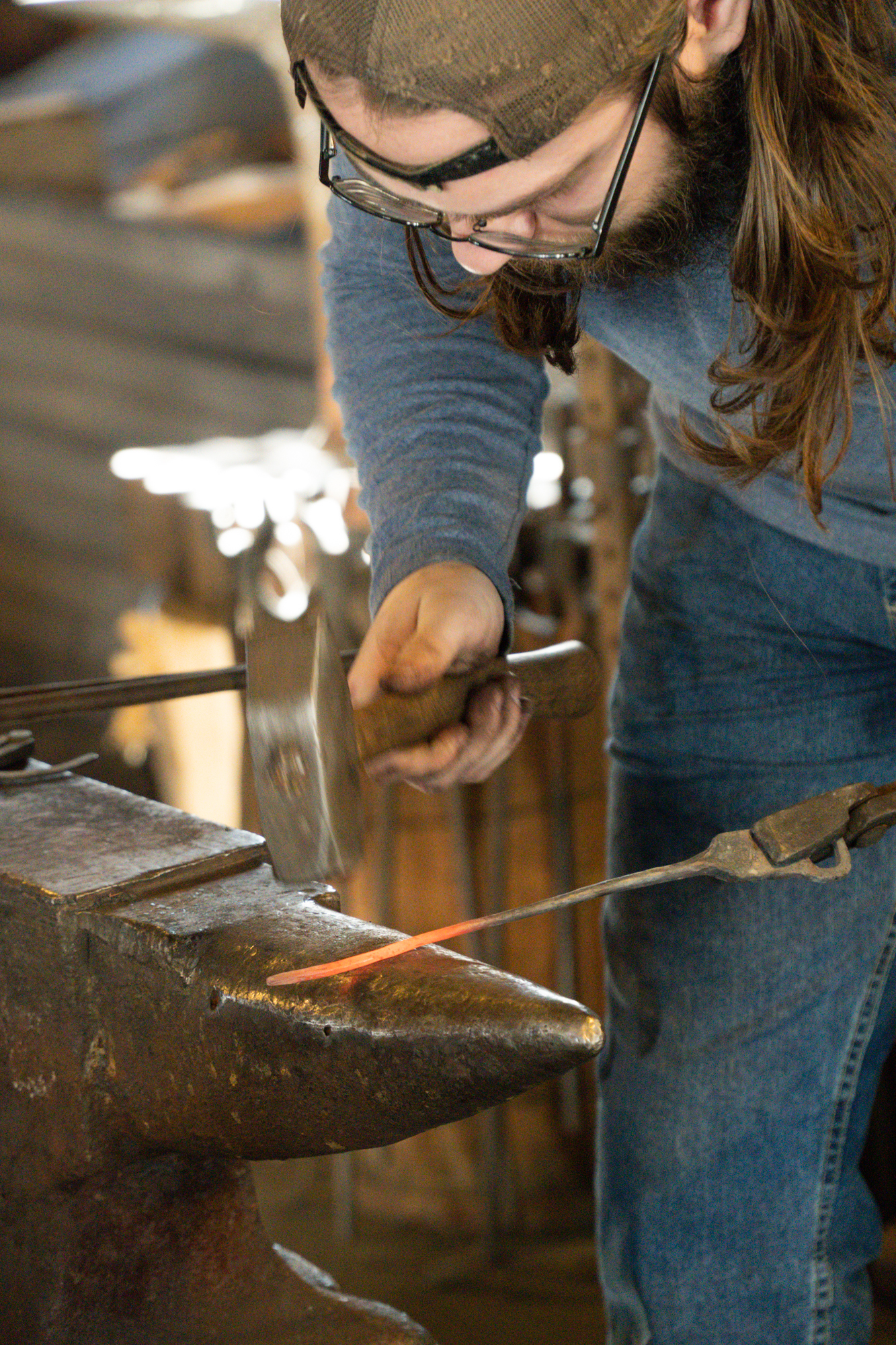
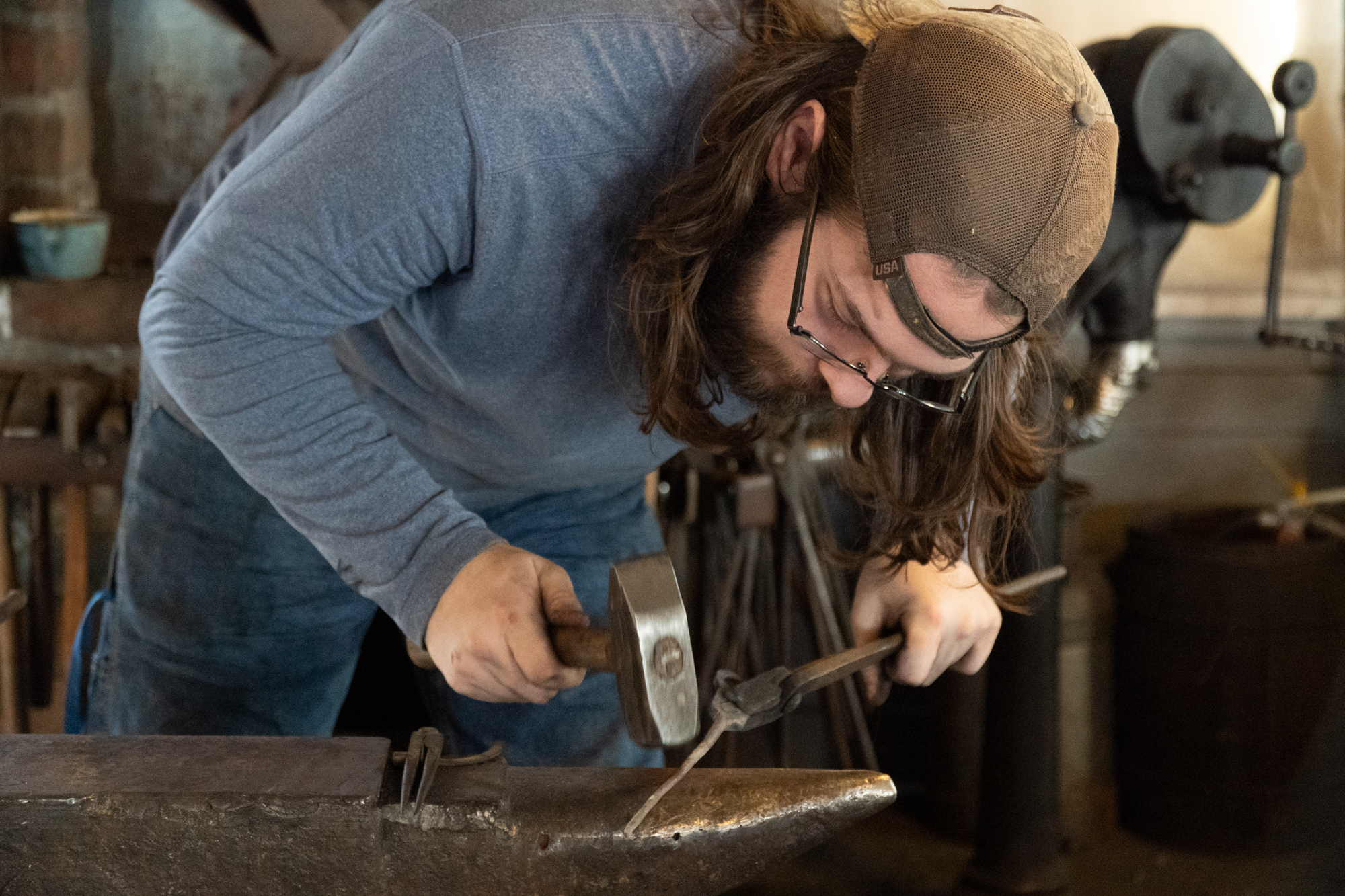
The museum has a blacksmithing area that still operates and hosts a club of enthusiasts for keeping the old trade alive. Tyler Gehringer, a college student who was back home for a break, was there that day, working on making a corkscrew from a piece of iron. He told me that he got into this community when he visited the museum with his parents and was intrigued by the men working in the shop. He came back again another weekend, and they taught him to stoke the fire, just one menial task. The next time he came back, they taught him something else—how to hammer round stock into square iron stock. The time after that, another slightly more advanced skill—how to hammer square stock into round stock. After that, the guys in the shop realized that he wasn’t going to just go away, so they gave him a test of initiation as a ticket to use the shop unsupervised: turn a piece of metal into a knot, using only the hammer and anvil, no tongs or other special tools. If he could manage that, the shop was his to use independently.
Tyler picked up the knot he had made and showed it to me. The price of entry to this club was to master a concrete skill, to take this piece of iron taken from the earth and smelted into metal, and then force it into the shape you want to create. It took a combination of violent and delicate work to forge this keepsake. A memento of no real particular practical use, but one that broadcast a message—I crafted this and with it, I unlock the doors to a new craft. A good step on the road to mastery.

 Ian Hutchinson