If you head southeast out of DC and toward the Chesapeake, you’ll come across a number of lighthouses. None are particularly grand, like the ones you might find on the Outer Banks or elsewhere on the rugged Atlantic coast, but still, the small houses tasked with keeping mariners safe as they plied the brackish waters of the bay make for a fun roadside stop.
The oldest light station on the Potomac is Piney Point. Originally built in 1836, it operated for more than a century before closing in 1946 and being converted into a museum.
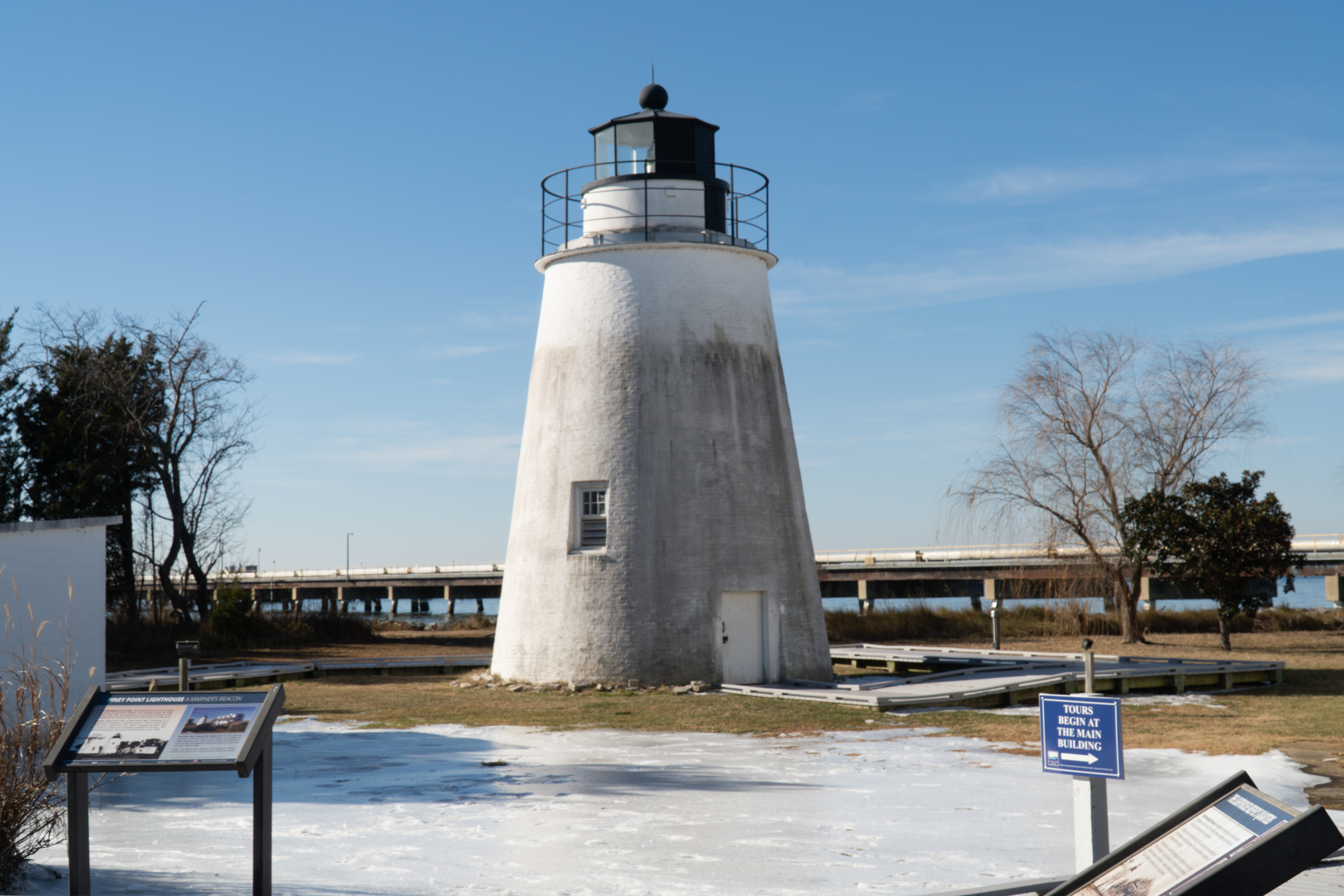
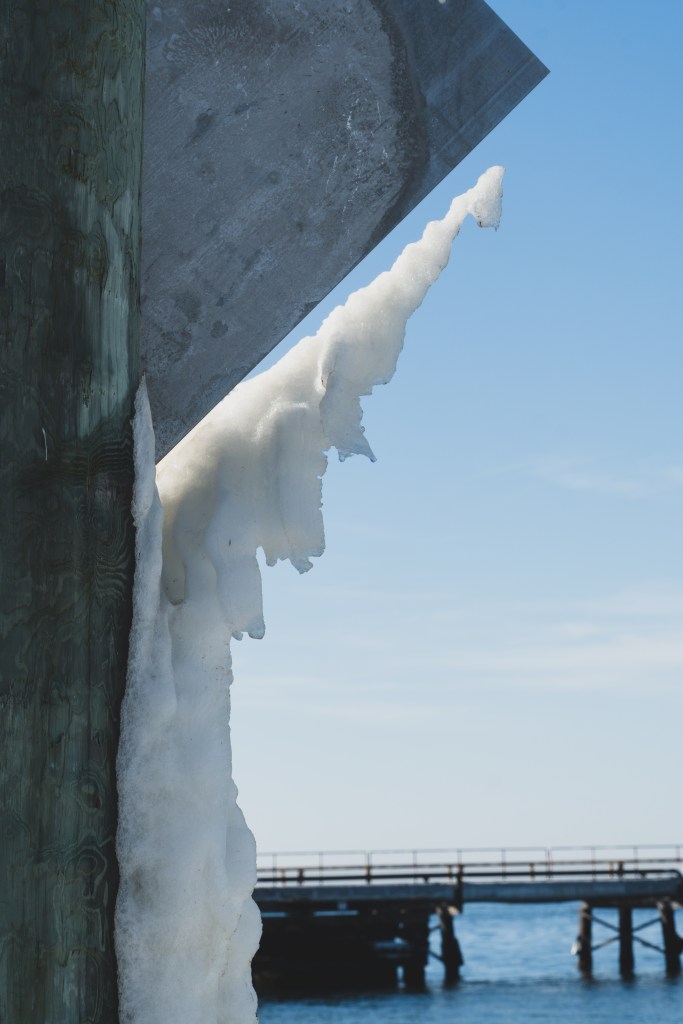
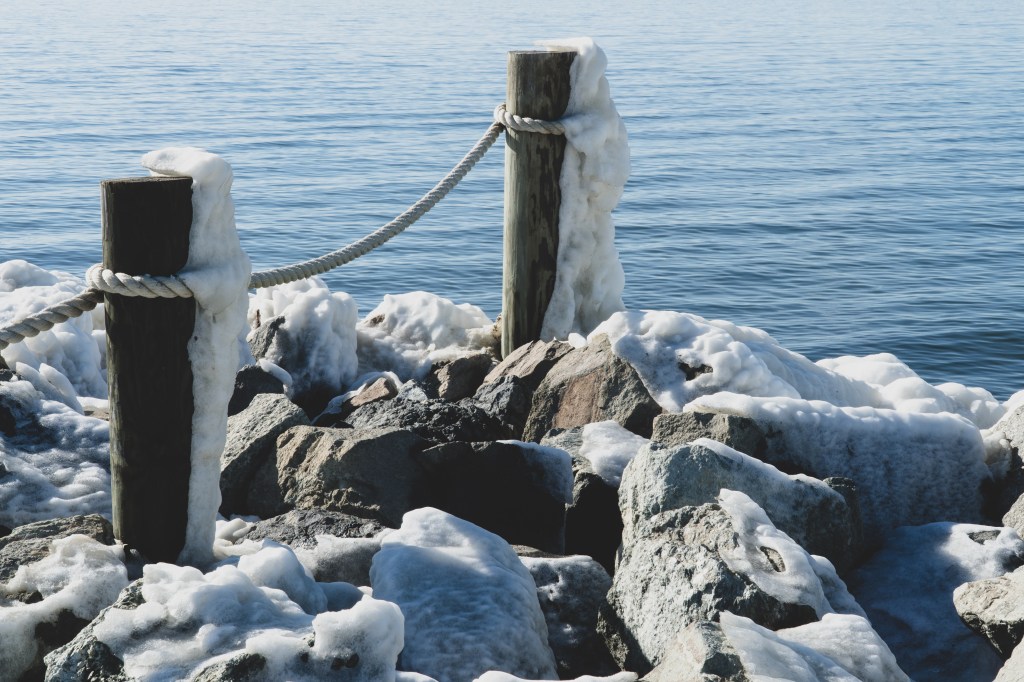
Days prior, the weather had been quite cold, and ice and snow still hung on in the shadiest places. The grasses down by the water had been encased in ice, creating little popsicles with the rugged straw inside at their frozen centers. Ice hung precariously off the signs at the water’s edge, and the sound of the waves gently falling on the rocky beach were only just too quiet to drown out the sound of melting ice dripping onto the thawing ground.


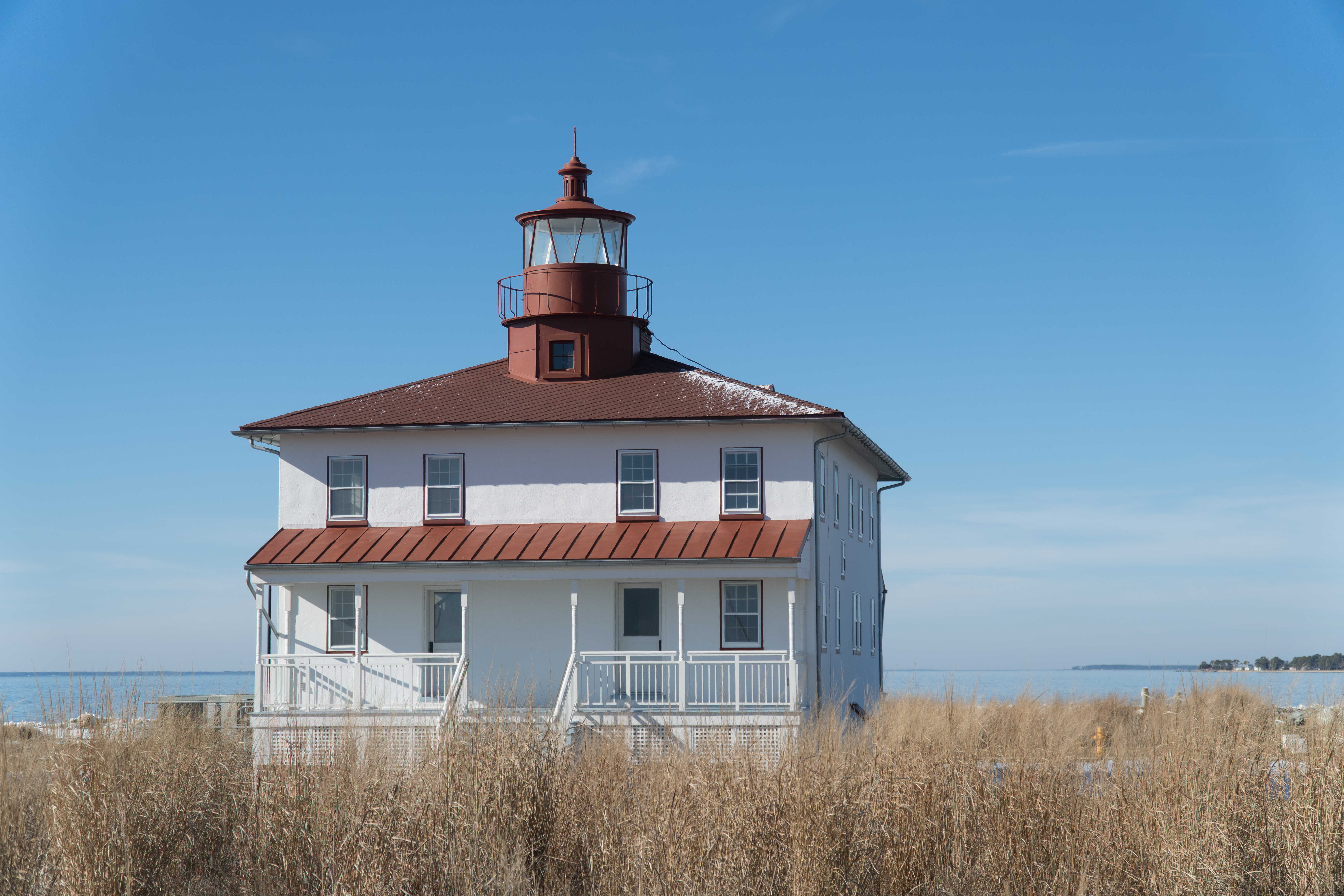
Further down the headland, you pass through St. Mary’s City, the original 17th century colonial capital of the state founded as a haven from acrimony between Catholics and Protestants. Although it later succumbed to the same acrimony that fueled the English Civil War, the town is generally considered the birthplace of religious freedom in America due to its founding laws outlining equality between Protestants and Catholics. As you continue south through rolling hills and denuded corn fields full of slashed stalks, the peninsula gets thinner and thinner until you simply run out of land. There, you’ll find Point Lookout Lighthouse.
The terminus of this peninsula has seen much. In the days of the Civil War, it was first set up as a hospital for Union soldiers, and was later converted into a large prison housing thousands of Confederate soldiers. Just up the road, there is an official monument to the Confederate dead, a granite obelisk marking a common grave for some 3,400. In the lot next door is a private monument to those same men—leaning much more heavily on the myths of the Lost Cause.
The original lighthouse on this location was built in 1830, but it was reportedly a shorter structure, though no photographs survive. In 1883, the house was enlarged into the two stories it now is, and the light was raised as well. It ceased operation in 1966, but since then has seen efforts to maintain the building, leaving it in the excellent condition it was in on the day.
Between being the site of thousands of prisoners’ deaths and the untimely demise of several of the lighthouse keepers over the years, it’s probably no surprise that a group of enthusiastic locals keep a GeoCities-style webpage running that documents the various “otherworldly” goings on at the lighthouse.

After leaving the frosty tip of the peninsula, it was time to head east to see the next lighthouse, Drum Point. After you tap the location into Google and approach the lighthouse, it strikes you as a very odd place for a signal light to be. While it’s next to a marina and boats, it isn’t directly next to a large body of water, rather it’s up Back Creek, more than a mile away from the actual Drum Point.
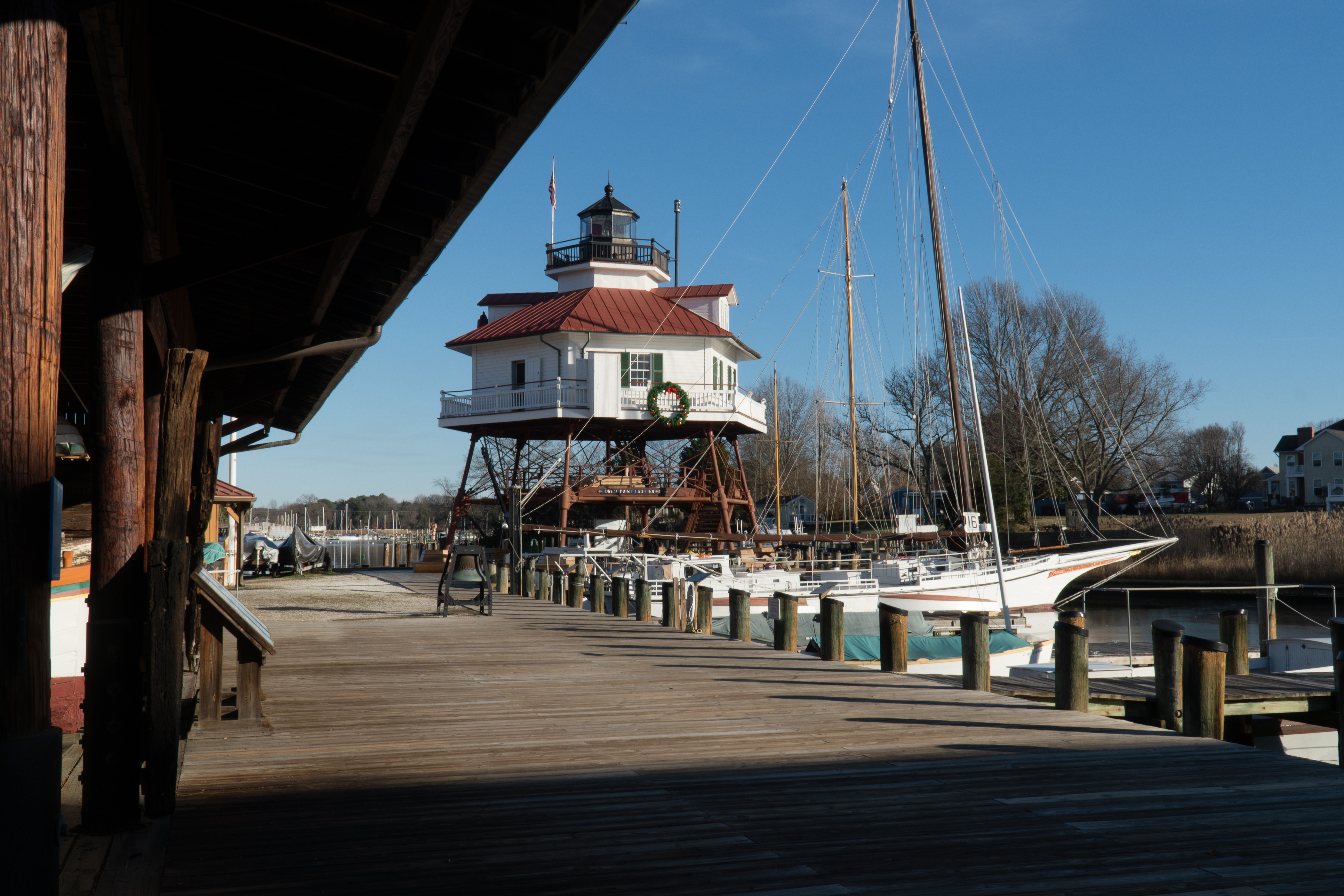
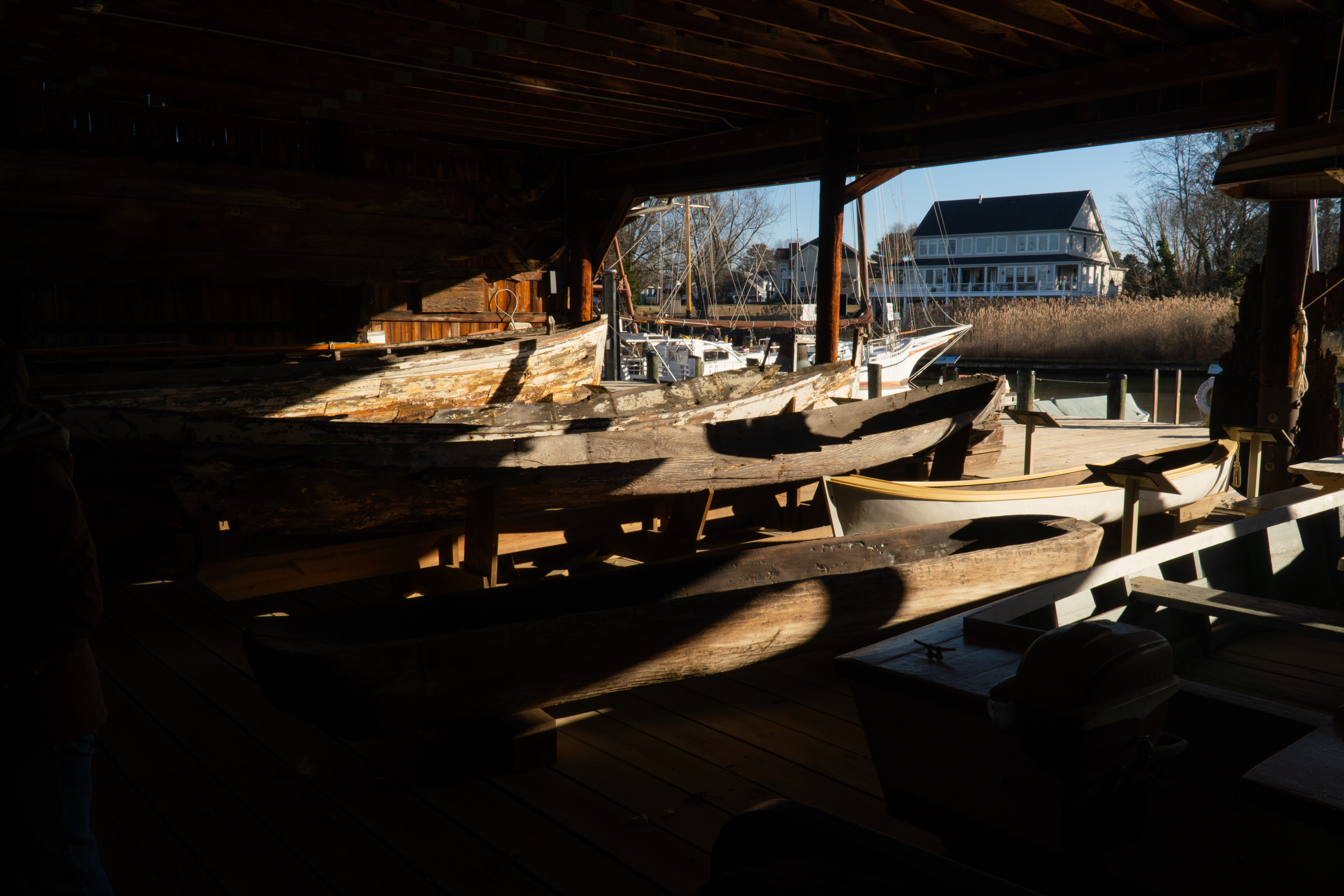
The screwpile light station had originally been built in 1883 and photos from around the time show the stilts in the waters of the Chesapeake at the mouth of the Patuxent River. After it was decommissioned in 1962, it was vandalized, but in 1975 was moved to the Calvert Marine Museum, a local repository of Chesapeake shipping and boating knowledge. The lighthouse abuts a large shelter full of various kinds of small craft, from a traditional dugout canoe to flat-bottomed crabbing boats.
 Ian Hutchinson